Automation for Agencies: Scale Without Hiring
The agency growth ceiling is brutally predictable. You land a few good clients, revenue climbs, and then you hire to keep up. But hiring is slow — a solid account manager takes 6-8 weeks to recruit and 3 months to become productive. Meanwhile, your margins compress, your founders are stuck managing people instead of winning clients, and one bad hire can wipe out a quarter of profit. Most agencies stall between 5 and 15 employees not because of a lack of demand, but because their operational model does not scale.
The agencies breaking through that ceiling are not hiring faster — they are automating the work that should never have required a human in the first place. According to McKinsey, 45% of agency work activities can be fully automated with current technology. That is not future speculation; that is work happening in your team right now: pulling data for reports, sending onboarding emails, scheduling posts, chasing invoice approvals. Agencies that automate these workflows first are taking on 2-3x the client load without touching their headcount — and banking the margin difference.
The rest of this piece is the how. If you would rather see what this looks like as a standing setup for an agency — built once and operated for you — that is the model we run.

The Three Workflows to Automate First
Not all automation is equal. The highest-ROI starting points for agencies are the workflows that are high-frequency, rule-based, and currently eating senior team time. Three stand out across every agency type — digital, PR, creative, and performance marketing alike.
1. Client Onboarding
The average agency spends 6-12 hours per new client on onboarding: gathering brand assets, setting up Slack channels, creating project folders, sending welcome sequences, and scheduling kickoff calls. None of this requires human judgment. An n8n workflow triggered by a signed contract can automatically create the client folder structure in Google Drive, spin up a Slack channel, send a branded onboarding email sequence via SendGrid, populate a CRM record in HubSpot, and add tasks to ClickUp — in under 90 seconds. Agencies running this report saving 8-10 hours per new client onboarding, which at a €75/hr blended rate equals €600-750 recovered per client.
2. Performance Reporting
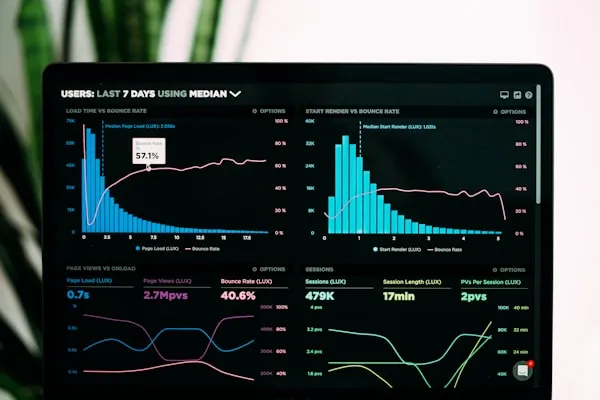
Weekly and monthly reporting is the single largest time sink for most performance agencies. A mid-size agency with 20 clients producing weekly reports spends roughly 40 hours per month on data pulling, formatting, and PDF generation — the equivalent of a full-time junior employee doing nothing else. Automated reporting workflows pull data from Google Analytics 4, Meta Ads, and Google Ads via their APIs, populate a Google Slides or Looker Studio template, generate a PDF, and email it to the client — on a schedule, without a human touching it. The setup cost is typically €2,000-4,000. The payback period at a €35/hr junior rate is under 6 weeks.
3. Social Media Scheduling and Repurposing
Content production is irreplaceable. Distribution and repurposing are not. Automation workflows can take a finished blog post or long-form video, use an LLM to generate platform-specific captions for LinkedIn, Instagram, and X, resize visuals via an API like Bannerbee or Placid, schedule posts via Buffer or Publer, and log everything to a content calendar in Notion — without a social media coordinator touching it. Agencies using this pattern report a 70% reduction in distribution time per piece of content.
The ROI Numbers Agencies Are Actually Seeing
Abstract automation promises are useless. Here are the numbers agencies are reporting after 90 days of workflow automation, pulled from implementation data across agencies in the DACH region and the UK.
- Client capacity: Average increase of 2.4x clients served per account manager, without additional hires. A team of 4 account managers previously managing 24 clients can now handle 56-60.
- Reporting time: Reduced from 40+ hours/month to 4-6 hours/month for agencies with 15-25 active clients. That is 34+ hours returned to billable or strategic work every month.
- Onboarding time: Reduced from 8-12 hours to under 1 hour per new client — a 90% reduction that directly accelerates revenue recognition.
- Error rate: Manual data entry errors in reports drop to near zero. One Frankfurt-based performance agency reported that client-facing report errors — which had caused two client churn events in 18 months — dropped to zero after automating reporting.
- Gross margin improvement: Agencies implementing three or more automation workflows report average gross margin improvement of 18-22 percentage points within the first six months, according to a 2024 survey of 340 agencies by Agency Analytics.
The pattern is consistent: the first automation frees up the most time, the second frees up more, and by the third workflow the agency has effectively added the equivalent of a full-time operations employee — without the salary, benefits, or management overhead.
The n8n + Make Stack for Agencies
Two tools dominate agency workflow automation at the SMB level: n8n and Make (formerly Integromat). They are not interchangeable — the right choice depends on your technical setup and data sensitivity requirements.
Make is the faster starting point. It is cloud-hosted, has a visual drag-and-drop interface, and connects to 1,800+ apps out of the box. A non-technical operations manager can build the client onboarding workflow described above in Make within a day. Pricing starts at €9/month for 10,000 operations. The limitation: all data passes through Make's servers, which creates GDPR exposure if you are processing client personal data — a relevant concern for agencies in the EU.
n8n is the serious choice for agencies with more than 10 clients or any data sensitivity requirements. It is open-source and self-hosted on your own infrastructure (a €15/month Hetzner VPS handles most agency workloads), which means client data never leaves your environment. It supports custom JavaScript nodes, meaning you can build logic that no visual tool can match. The learning curve is steeper — plan for a 2-3 day ramp-up — but the ceiling is far higher. n8n is the right backbone for agencies that intend to automate seriously.
The recommended agency stack looks like this:
- Automation backbone: n8n (self-hosted on Hetzner or Railway)
- CRM: HubSpot (free tier handles up to 1M contacts) or Pipedrive
- Project management: ClickUp or Notion (both have full API access)
- Email sending: SendGrid or Postmark (transactional), Mailchimp (campaigns)
- Reporting: Looker Studio + Google Slides API or Whatagraph
- Social scheduling: Publer or Buffer (both have n8n nodes)
- LLM layer: OpenAI API (GPT-4o) or Anthropic Claude API for caption generation, summarization, and classification
Total monthly cost for this stack at an agency with 20 clients: €80-150/month. That is the cost of roughly two hours of a freelance copywriter's time — for infrastructure that runs 24 hours a day without breaks or sick days.
Agency Automation FAQ
How much can agencies save by automating media workflows?
The hours hide in coordination, not production: assembling reports, chasing approvals, re-cutting one piece of content for four channels. Automate that layer and each person gets hours back every week — what that is worth depends on your billable rate, which is why we measure your workflows in an audit instead of quoting our averages.
What platform helps agencies scale without hiring more staff?
No single platform does. What works is an orchestration layer over the tools you already run — project management, reporting, content — so that kickoffs, status updates and handoffs happen without a person pushing them. The platform matters less than standardising the process it automates; that is the actual constraint on client capacity.
How can agencies scale small content teams with AI automation?
One source piece becomes a queue: drafts and per-channel cuts are generated against your brand voice, a human approves every piece, and the calendar fills weeks ahead. A small team stops producing volume and starts editing it. The approval gate is what keeps quality at agency standard — the system does the typing, not the judgement.
Key Takeaways
- The three workflows with the highest ROI for agencies are client onboarding (saves 8-10 hours per client), performance reporting (saves 34+ hours/month), and social media distribution (70% time reduction per content piece) — start with the one where your team is losing the most hours today
- n8n is the right automation backbone for agencies serious about scaling — self-hosted, open-source, GDPR-safe, and capable of handling every workflow in this post for €15-20/month in infrastructure costs
- Agencies implementing three or more automation workflows report 18-22 percentage point gross margin improvements within six months — the math is straightforward: you are converting senior team hours into infrastructure costs at a 10-to-1 ratio
Conclusion
The agency scaling problem is solved by subtraction, not addition. Every hour your account managers spend pulling report data, setting up Slack channels, or scheduling social posts is an hour they are not spending on strategy, client relationships, or new business. Those are the activities that actually justify your retainer fees.
Automation does not replace agency talent. It removes the administrative layer that was quietly preventing your talent from doing the work clients actually pay for. The agencies winning new business in 2026 are the ones that can say with confidence: we can onboard your account and have a full reporting setup running within 48 hours. That operational credibility is itself a competitive advantage — and it is built on the workflows described in this post.